How Bail Works
When someone is arrested, they’re taken into custody and booked at a local jail. After booking, the court decides whether that person can be released before trial and, if so, under what conditions. One of the most common ways to secure release is by posting bail—a financial guarantee that the defendant will return to court for all required appearances.
However, bail can often be very expensive—sometimes thousands or even hundreds of thousands of dollars. Most people don’t have that kind of cash readily available. That’s where bail bonds come in. A bail bond allows someone to be released from jail without paying the full bail amount upfront.
1. What Is Bail?
Bail is money or property given to the court to ensure a person returns for their court dates. It’s not a fine or punishment—it’s a form of security. If the defendant shows up to all court appearances, the bail is refunded (minus some administrative fees). If they don’t, the bail is forfeited, and a warrant is issued for their arrest.
Judges set bail amounts based on several factors:
- The severity of the crime
- The defendant’s criminal history
- Flight risk (likelihood of running away)
- Community ties (job, family, etc.)
In California and most states, bail amounts follow a county bail schedule, but judges can adjust the amount during a bail hearing.
2. What Is a Bail Bond?
A bail bond—also called a surety bond—is a financial agreement made by a bail bondsman or bail bond company on behalf of the defendant. The bail bondsman guarantees the full bail amount to the court, allowing the defendant to be released.
In exchange, the defendant (or their family) pays the bail bondsman a non-refundable fee, usually 10% of the total bail amount in California. For example, if bail is set at $20,000, the cost of a bail bond would typically be $2,000.
The bail bond agent then posts the bond with the court, promising to pay the full amount if the defendant fails to appear.
3. Who’s Involved in the Bail Bond Process?
The main parties in a bail bond transaction are:
- The Defendant: The person charged with a crime.
- The Indemnitor (Co-Signer): A family member or friend who signs the contract and guarantees the defendant will appear in court.
- The Bail Bondsman (Agent): A licensed professional who provides the bond to the court.
- The Court: The authority that holds the bond and ensures the defendant’s compliance.
The indemnitor takes financial responsibility if the defendant skips court. This means they could owe the full bail amount or risk losing collateral they used to secure the bond.
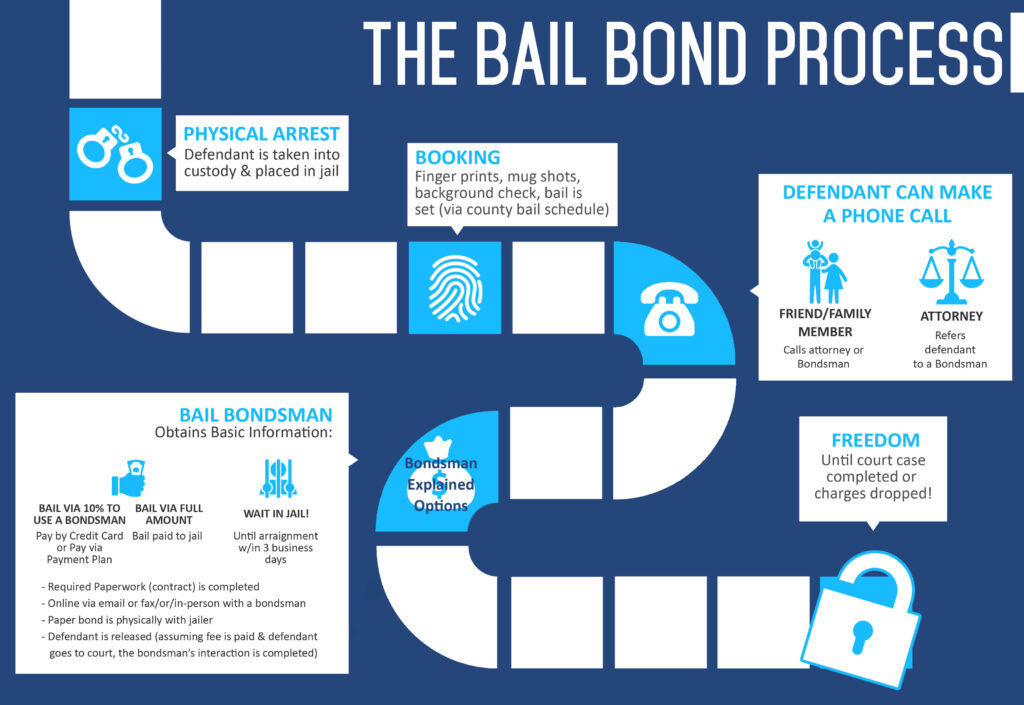
4. The Step-by-Step Bail Bond Process
Step 1: Arrest and Booking
After an arrest, the individual is taken to jail for fingerprinting, photos, and background checks. Once processed, they become eligible for bail (unless the charge is too serious, like murder, where bail may be denied).
Step 2: Setting the Bail Amount
The jail or court determines the bail amount based on the local bail schedule or the judge’s discretion.
Step 3: Contacting a Bail Bondsman
The defendant or their family contacts a licensed bail bond company. The agent will ask for information such as:
- The defendant’s full name and booking number
- The jail location
- The charges
- The bail amount
Step 4: Paperwork and Payment
The bail bondsman explains the terms, collects the premium (usually 10%), and may require collateral (like property, jewelry, vehicles, or a signature from a financially stable co-signer) to secure the bond.
Step 5: Posting the Bond
Once the agreement is signed and payment made, the bail bondsman delivers the bond to the jail or court. The defendant is released—usually within a few hours, depending on the facility’s workload.
Step 6: Defendant’s Responsibilities
The defendant must:
- Attend all court dates
- Comply with any court conditions
- Stay in contact with the bondsman
If they fail to appear (known as “jumping bail”), the bail bond company may hire a bail enforcement agent (bounty hunter) to locate and return the defendant to custody.
Step 7: Case Resolution and Bond Release
When the court case concludes—whether through dismissal, plea, or sentencing—the bail bond is discharged, even if the defendant is found guilty. The court releases the bail obligation, and any collateral used for the bond is returned (minus the 10% premium).
5. What Happens If the Defendant Misses Court?
If a defendant misses a court appearance:
- The court issues a bench warrant for their arrest.
- The bail bond company is notified and has a limited time (usually 180 days in California) to find and return the defendant.
- If the defendant cannot be located, the bondsman must pay the full bail amount to the court.
- The co-signer (indemnitor) may lose any collateral pledged for the bond.
If the defendant later appears voluntarily or is arrested, the bail can sometimes be reinstated.
6. Types of Bail Bonds
While surety bonds (through a bail bond company) are most common, there are other types:
- Cash Bail: The full bail amount is paid directly to the court and refunded after the case ends.
- Property Bond: Real estate is used as collateral; if the defendant fails to appear, the property can be seized.
- Own Recognizance (O.R.) Release: The defendant is released without paying bail, based on a promise to appear in court.
- Federal and Immigration Bonds: Specialized bonds required for federal or immigration-related offenses.
7. Why People Use Bail Bond Services
Bail bond companies make it possible for people to regain their freedom quickly without financial devastation. Their expertise also helps families navigate the legal system efficiently.
Key Benefits:
- Immediate release from jail
- Affordable payment options
- 24/7 availability
- Expert guidance and confidentiality
- Emotional relief for families
8. Responsibilities of a Co-Signer
When someone co-signs a bail bond, they take on serious obligations:
- Ensuring the defendant attends court
- Paying additional fees if the defendant violates terms
- Risking loss of collateral if the bond is forfeited
Before signing, it’s important to understand all terms clearly and work only with licensed professionals.
9. After the Case Ends
Once the court case is over, the bond is exonerated—meaning the obligation is lifted. The bail bondsman is no longer responsible to the court, and the co-signer’s collateral is released. However, the premium paid to the bondsman (the 10%) is non-refundable, as it covers the service provided.
10. In Summary
Bail bonds exist to balance two goals: protecting public safety and preserving the defendant’s right to freedom before trial. For most people, posting bail through a bond company is the most practical way to get a loved one home while awaiting court proceedings.
The process is built on trust, accountability, and legal compliance. When handled by an experienced, licensed bail bond agency—like Palmdale Bail Bonds—it ensures fairness, clarity, and peace of mind for everyone involved.
In short:
A bail bond allows someone to regain their freedom quickly while guaranteeing they’ll return to court. It’s not just a financial transaction—it’s a vital service that helps families stay together and individuals maintain their lives while navigating the justice system.